
Section 3.1: Pre-grafting Vineyard Preparation – Virus Assessment

“Field grafting is a great way to change variety or clone and quickly return a vineyard to full productive potential. Field grafters are only partly responsible for the success or failure of field grafting. Understanding what preparation and followup is required as a grower to influence the final strike rate is critical. VitiSense provides all the information, techniques, demonstrations and explanations and to ensure your field grafting experience is a positive one”.
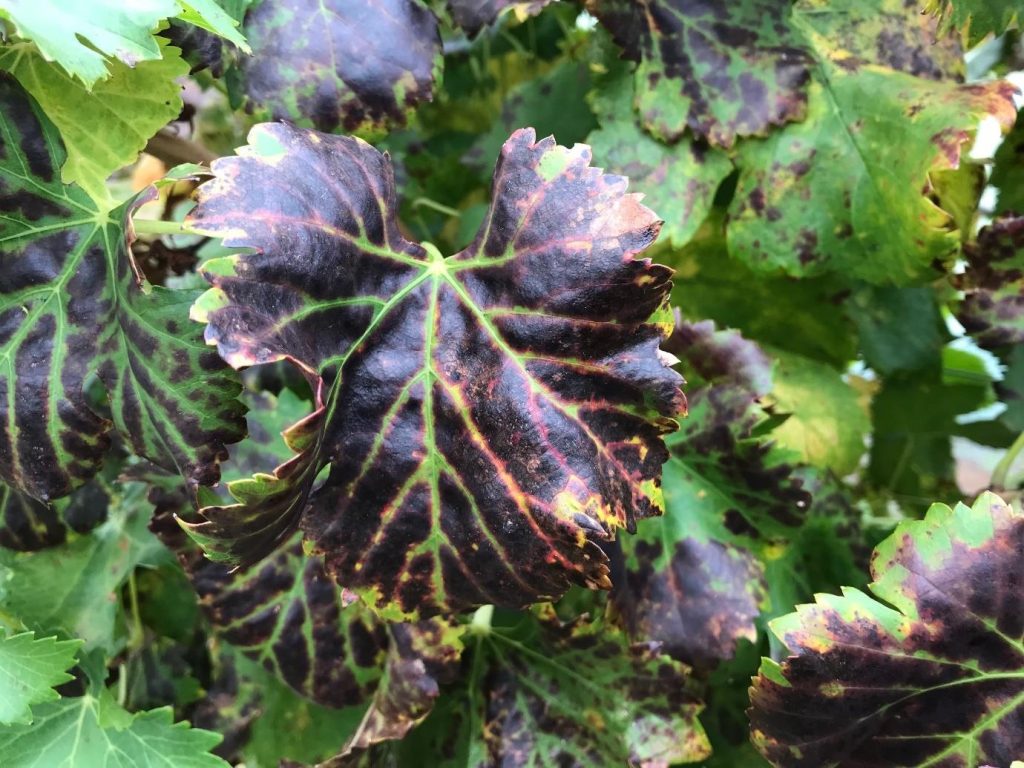
Grapevines are prone to infection from a number of viruses. The origin of virus is usually from nursery material however it can be introduced from neighbouring vineyards by flying pests, vineyard contractors, tourists or any other human movement (even yourself). It is critically important to test for the virus status of your vineyard prior to preparing it for field grafting. Even if your vineyard was planted with certified virus-free material it could have been infected at some stage after planting. Virus usually infects individual vines and spreads to other vines via vectors (carriers) such as highly mobile insects including mealy bugs, scale and mites. THERE IS NO CURE FOR VINE VIRUS INFECTION except to pull out and burn the vines , roots and all. You might think that scale and mealy bugs aren’t that mobile however, they are really good hitchhikers and ants like to “farm” them and carry them to where they can then enjoy the “honeydew” exudates the insects provide them. Both of these pests are difficult to control once present in a vineyard (See strategies for their control in IPM section).
Virus Impacts
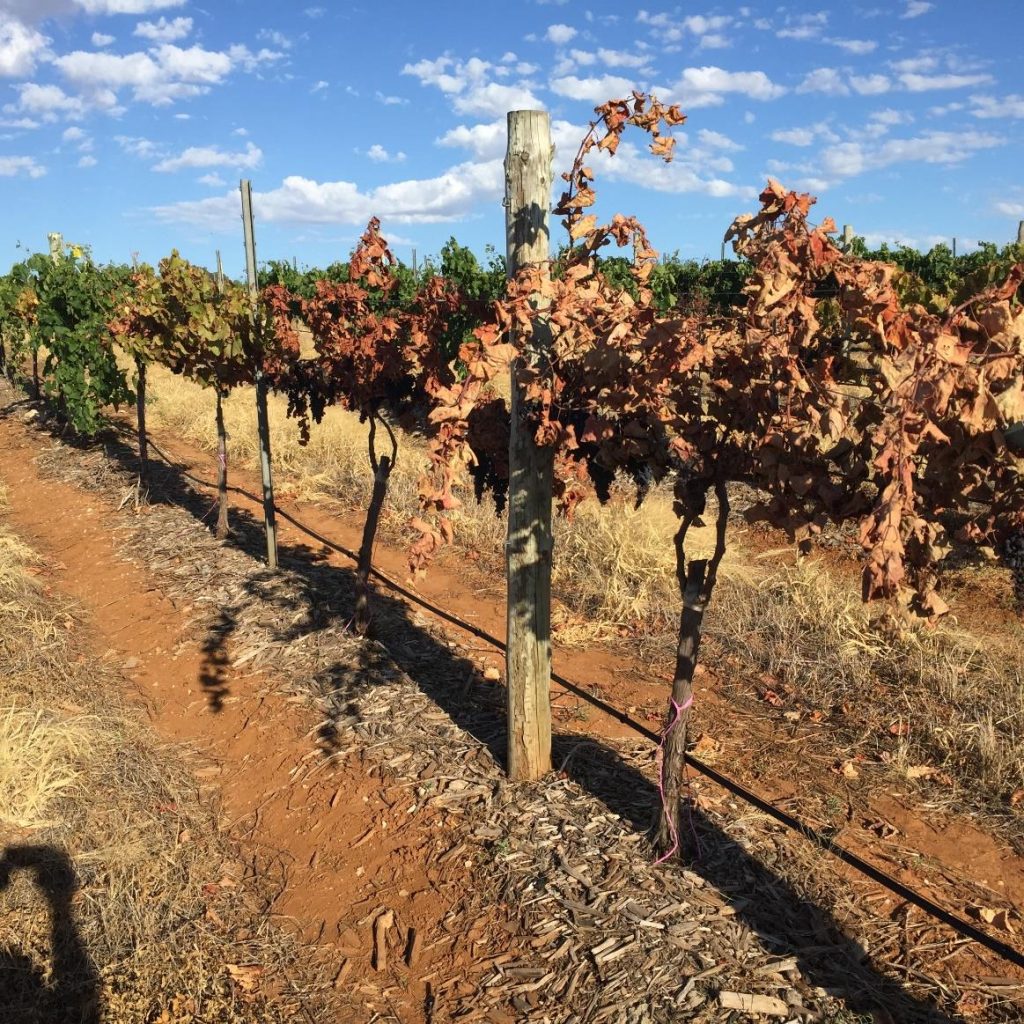
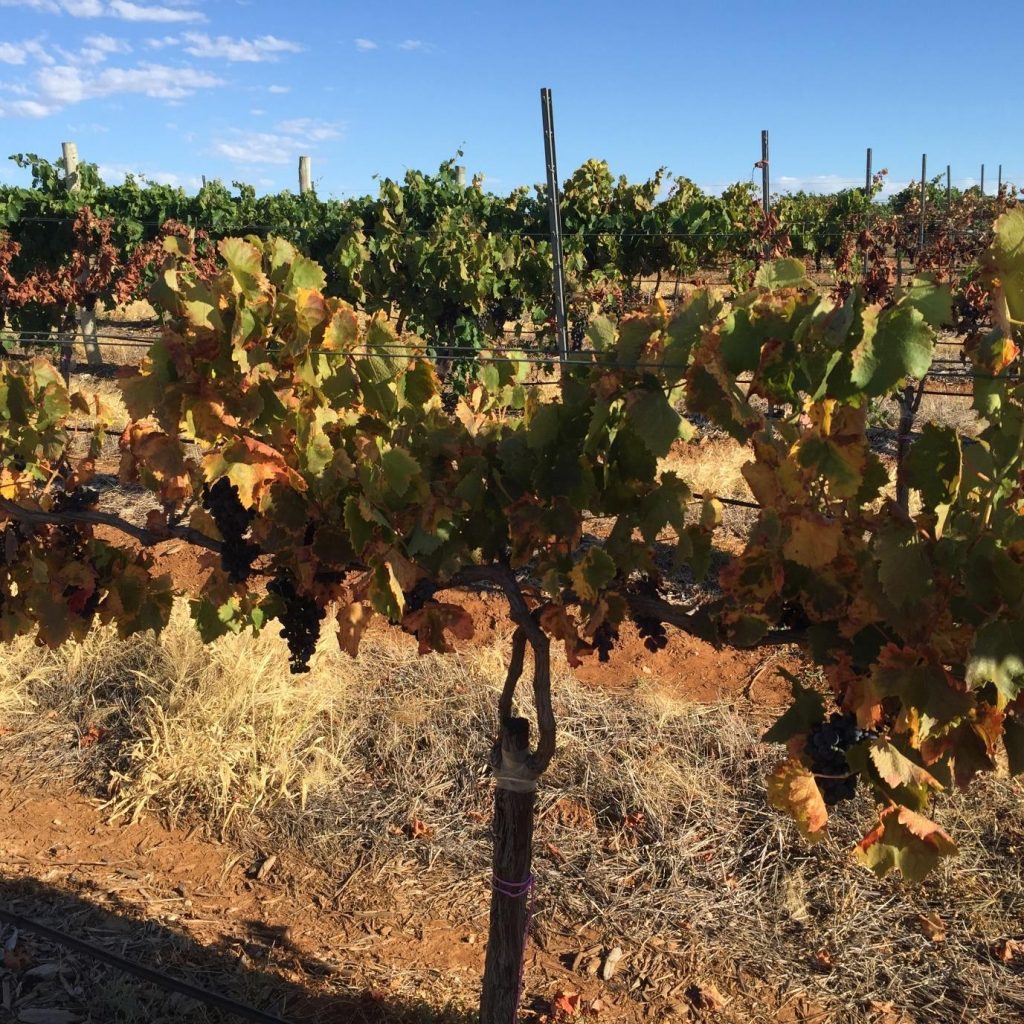
Some vines and varieties can survive and thrive with virus infection however the effects can be devastating in other instances. The impacts of virus on field grafted vines can be immediate with a low or non existent strike rate after grafting due to “incompatibility”. It seems the level of virus infection in both the trunk and scion (virus titre level) can have a bearing on the strike rate and could be associated with a “patchy” strike rate and uneven shoot development. This is thought to be due to virus infections in vineyards being “patchy” due to the slow spread and infection of individual vines in close proximity to infected vines by vectors. Some vines will still have a good strike rate (>95%) with virus present however as titre levels increase over time, the vines can display worsening symptoms such as stunted and deformed canes, abnormal leaf shape and colour symptoms, delayed fruit maturity (sugar development), low colour in red grape varieties and even sudden death at random times after grafting.
Vineyard Virus Assessment
Understanding the virus status of both scion and rootstock is the first step before committing to field grafting in your vineyard. There are a number of viruses effecting grapevines with the main ones being the Leaf roll viruses, GVA (Shiraz decline) and Pinot gris virus. Some virus-infected vines have obvious symptoms (LR1-3) whilst others can be symptomless (GVA in Chardonnay). It is always recommended to test for virus using accredited analytical laboratory service with a virologist whose expertise is grapevines. To achieve an accurate understanding of virus infection in a vineyard, a representative sampling procedure needs to be first established. Aerial imagery can be useful to locate areas of variation in the vineyard which may be due to virus incursion. Monitoring for visual symptoms at the appropriate growth stage of the vines will allow tagging for pathology testing. Leafroll virus symptoms of leaf discolouration and curling of leaf margins occurs late season usually post harvest. GVA viral symptoms are more difficult to detect however can be observed at a similar late time late in the season and are characterised by not lignified and disfigured canes, limey or yellow leaves and a delayed maturity (Low sugar/Low colour in reds/high acid) in fruit compared with non infected vines. symptoms are more difficult to detect however can be observed at a similar late time late in the season and are characterised by not lignified and disfigured canes, limey or yellow leaves and a delayed maturity (Low sugar/Low colour in reds/high acid) in fruit compared with non infected vines.
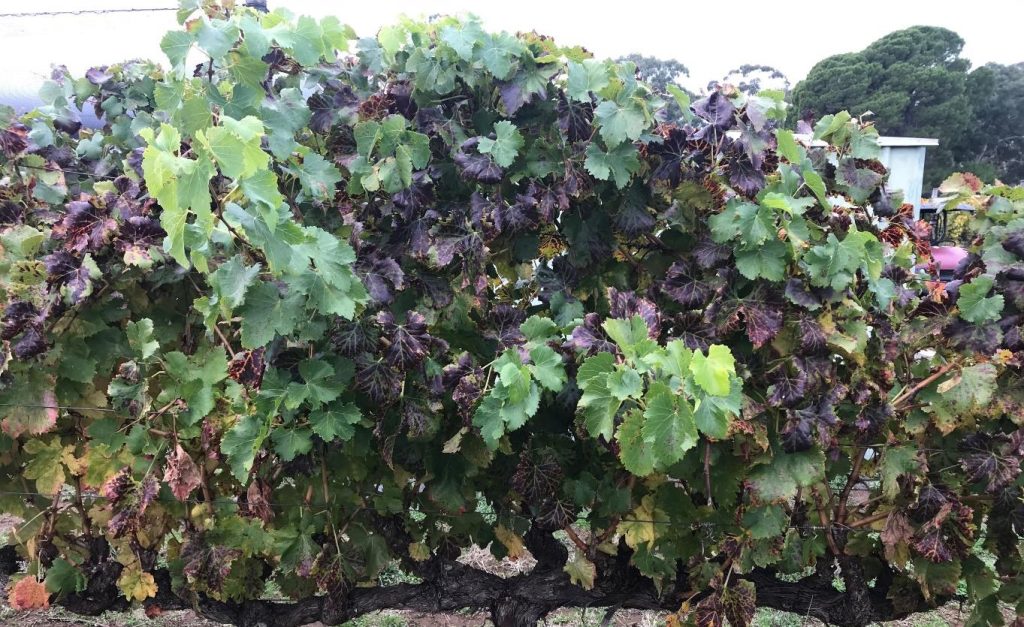
Virus-like Symptoms
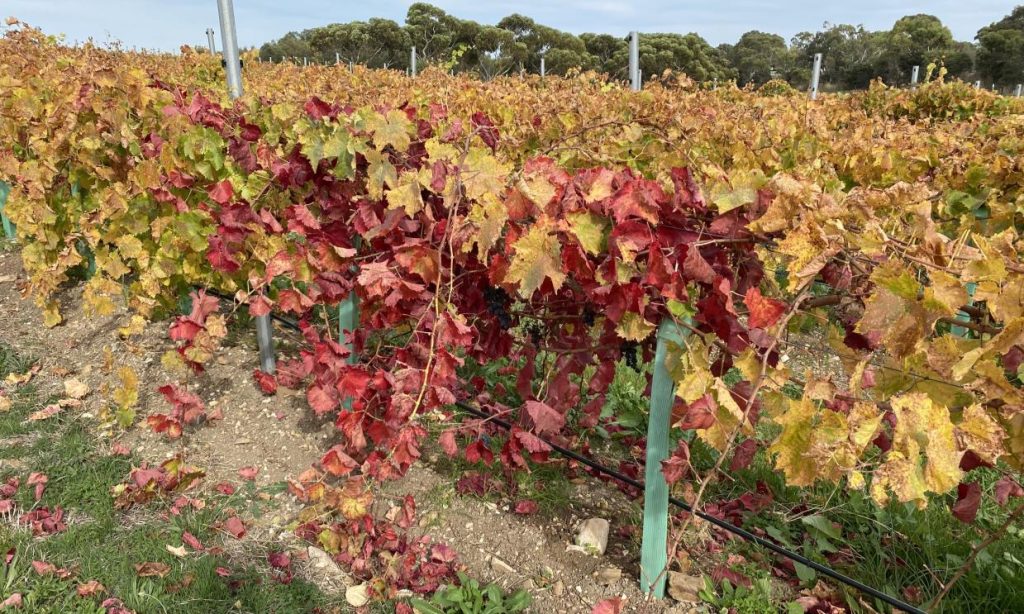
It was once thought that vine coron training needed to wrap canes as tight as possible onto the cordon wire to avoid it coming off fin wind or with a full crop. We know better, however the ‘old school” training has now resulted in strangled cordons which can exhibit the same symptoms as trunk disease especially Eutyps lata (stunted and distorted shoots and leaves) and also resemble leafroll virus (Leaf reddening late season).
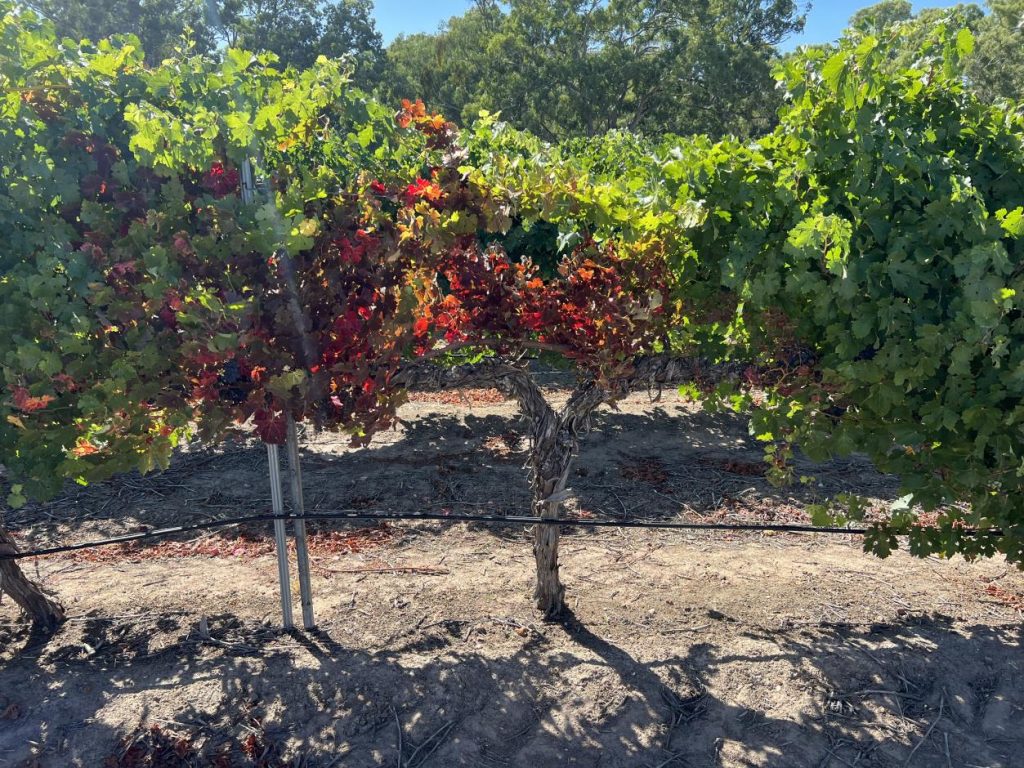
Nutritional Disorders
Some virus symptoms can be confused with nutritional disorders. For instance, Leafroll 3 leaf symptoms appears around veraison the same time as magnesium deficiency. Symptoms of inter veinal reddening very similar (red varieties) are both symptoms of Leafroll 3 and Mg deficiency are on similar basal leaf positions on canes (more mature leaves). The difference between the two is Mg deficiency symptoms are associated with red wedge shaped discolouration (red varieties) on lime green and yellow leaves due to the reduction in leaf chlorophyll production and green colour. Leafroll virus inter veinal discolouration will continue to spread so as only the veins remain green. Leaf margins also have distinctive curvature.
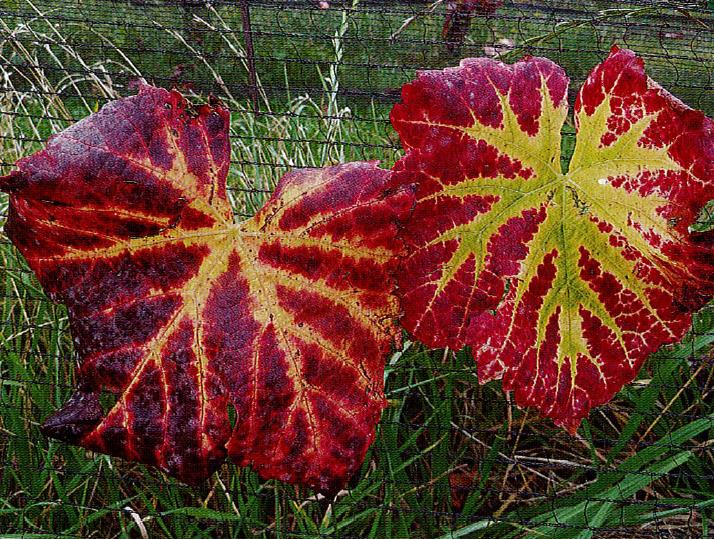
Confirmation of the Correct Diagnosis
If there is doubt about what the symptoms look like then the first step is to ensure that the vines are tagged with tape and locations recorded. Consult an expert who can assist with an accurate diagnosis. Virus testing needs to be organised by the grower and should be the first step before commencing a field grafting program. The virus testing service will provide guidelines for how to sample vine material and the costs involved. If you are sourcing vine budwood from an accredited VINA nursery there is still no guarantee that material is 100% virus free however they will have protocols for virus minimisation with regular testing of source blocks and nursery hygiene. It is possible to have vine material “cleaned” of virus however this may not be a good investment as vines can not be easily protected from virus infection once planted in the field. Tissue culture is likely to be more available technique in the future for vine propagation of virus-free material however this will not be suitable for budwood.
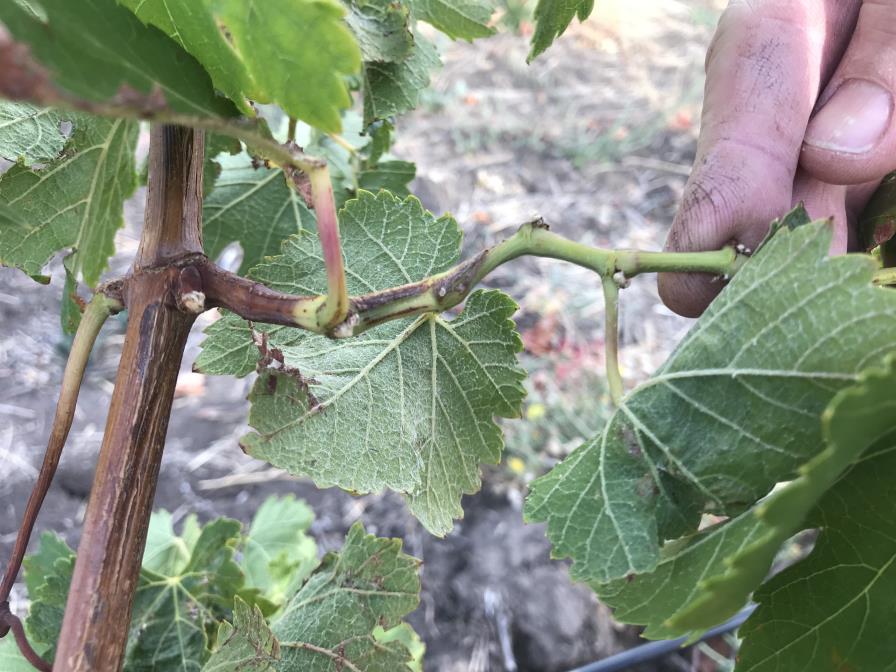
GVA virus in Shiraz. Distorted and unlignified canes at veraison. Similar symptoms to Boron deficiency and bud mite damage (zig-zag cane shape)
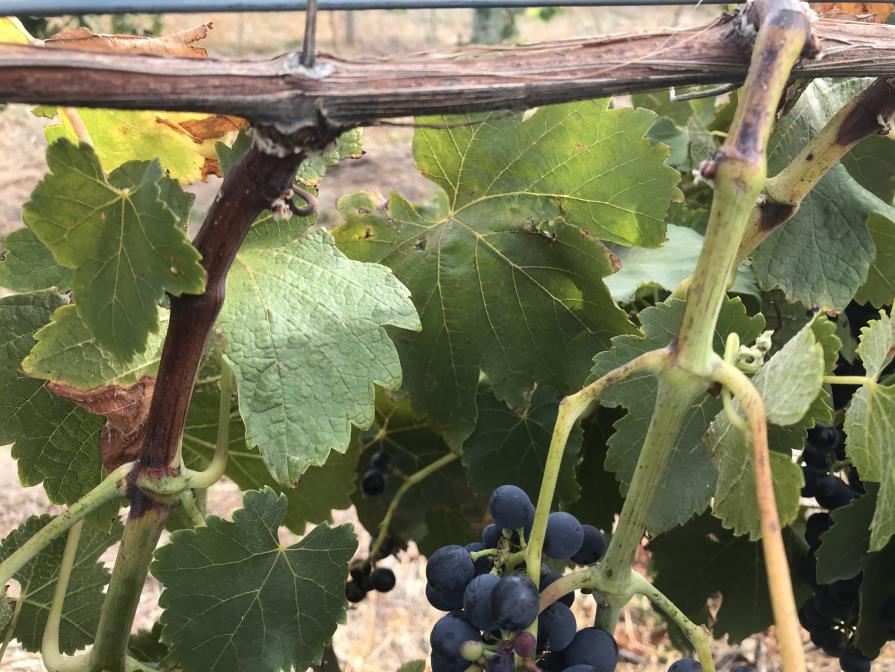
Partially lignified and unlinified canes in Shiraz – GVA virus symptoms observable from veraison to dormancy.
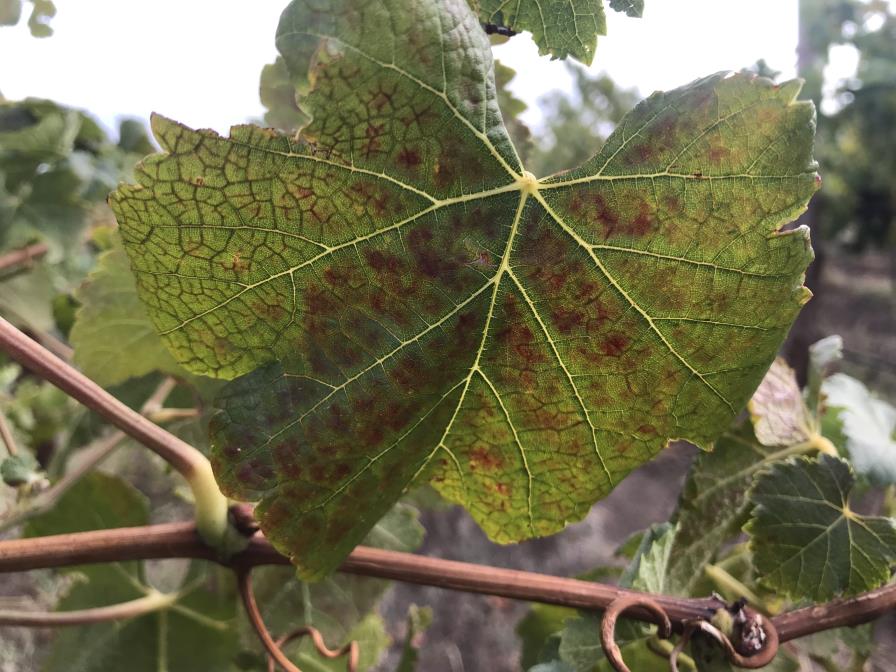
GVA or Leafroll viral symptoms in Shiraz. Low titre infection.
GVA
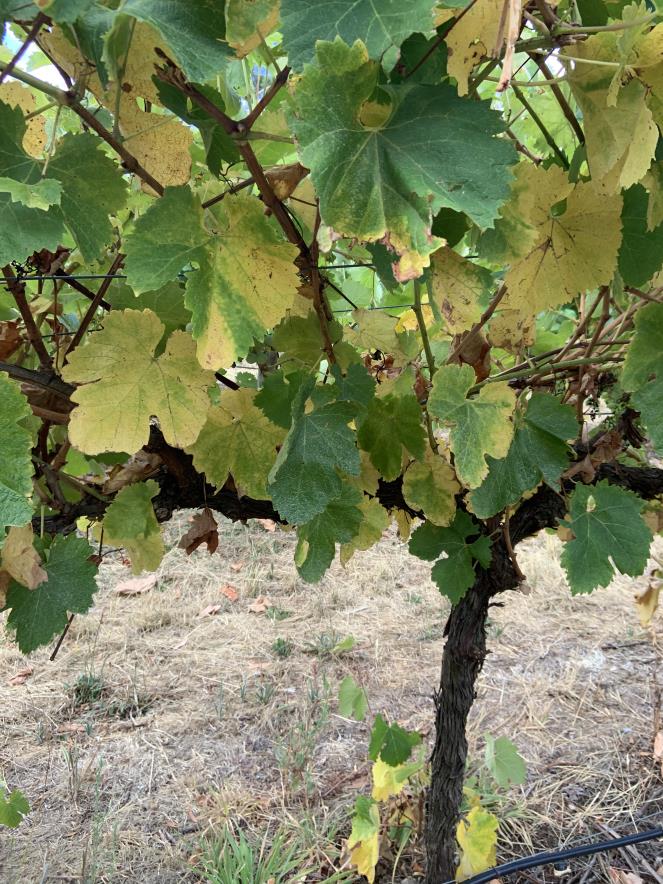
GVA symptoms in Shiraz – Yellow leaves, uneven green colour reflects different levels of titre in different leaves.
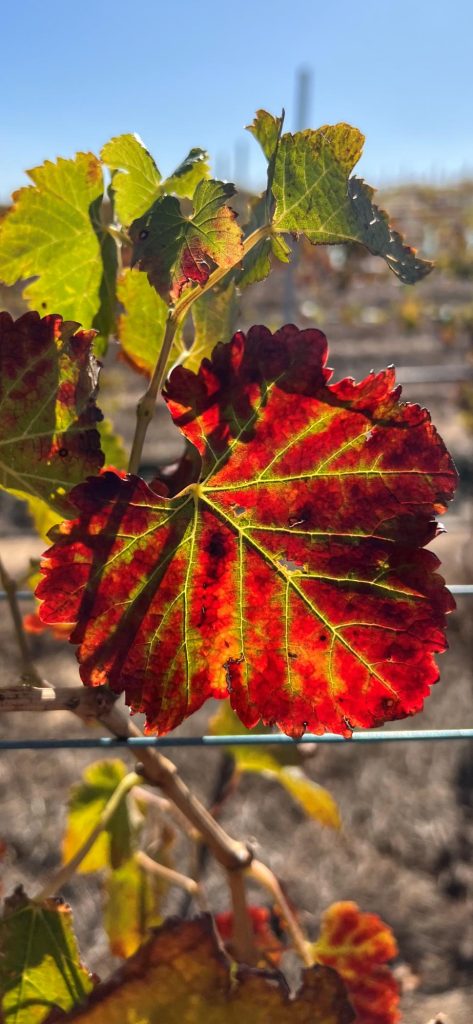
Leafroll 3 virus in two year old Shiraz.
Virus infects individual vines so there can be a mixture of infected and uninfected vines in a block. Therefore, when testing for virus it is important to sample to represent the overall vineyard status. This may involve testing from multiple sites. Observing for symptoms of viral infections in vineyards should be done annually. Look for obvious vine differences from the majority and tag those vines. Use the VitiSense ID guide to help. Then have vines tested. There is no cure for virus in grapevines and the best approach to avoid virus spread is to remove infected vines, roots and all and then target any vectors present with a control strategy.
Low grafting strike rates are often the result of certain viruses being present in individual vines in a vineyard. These vines cannot be regrafted and need to be pulled out. It pays to test for virus before grafting.
Virus symptoms on vines after the first growing season. A successful initial strike rate (>98%) was followed by failed vines the following season leading to their full removal.
Virus testing contact (Australia)
Virus testing of both rootstock and budwood are recommended prior to grafting. Please allow 3 weeks for results. Cost estimate is @$150/sample.
Phone 08 83136600
Or
Crop health services DPI Victoria
Dr Fiona Constable
Phone (03) 9032 7323
Virus Report
You will receive a virus status report and recommendations about grafting from the virologist. Some grafters may request a copy of your virus testing results before commencing grafting. I cannot stress enough the importance of virus testing prior to grafting. It can save many dollars and the pain of finding out afterwards that virus was present and grafting was unsuitable.