Section 3.2: Pre-grafting Vineyard Preparation – Budwood

“Field grafting is a great way to change variety or clone and quickly return a vineyard to full productive potential. Field grafters are only partly responsible for the success or failure of field grafting. Understanding what preparation and followup is required as a grower to influence the final strike rate is critical. VitiSense provides all the information, techniques, demonstrations and explanations and to ensure your field grafting experience is a positive one”.
Budwood Sourcing
Budwood selection is the growers responsibility in most cases. Some grafters offer this service however it can lead to potential conflicts if the grafting job does not go well. Budwood can be harvested by the grower at pruning or ordered from a vine nursery.
Nursery Budwood
It is always preferable to source budwood from a professional nursery. Budwood ordered from a registered (VINA accredited https://www.vina.net.au/Accreditation_Scheme.html) vine nursery is recommended as these nurseries will;
- Guarantee the cuttings are “true to type” for variety and clone,
- Practice industry standards and practices around management virus and other potential vine material diseases such as Crown Gall,
- Have access to reliable cold storage,
- Package correctly and deliver to the job site when required (delays in transport can cause problems with breaking dormancy which makes the budwood unsuitable for grafting).
Sourcing Your Own Budwood
Sourcing your own budwood is fine so long as the source block vineyard is;
- “true to type”,
- Disease free especially virus, trunk disease, powdery mildew, mites and phomopsis,
- suitable vigour for medium cane diameter and not too thin or large (Eg Bull canes),
- harvested when vines are dormant,
- harvested from the vine and rehydrated over night prior to bagging and refrigeration,
- NOT harvested from the ground after pre-pruning as the cuttings dry out and could be compromised.
- Straight and 4-6 buds average length.
Budwood Order Timing
Autumn prior to cutting season for nurseries is the best time. Don’t leave it until the last minute as you maybe disappointed and cannot graft without it.
Most nurseries only “cut to order” and do not have spare stock if you underestimate your order or loose your cuttings due to poor handling. We have seen in the past where growers have stored their own budwood in cool rooms that are unreliable and the budwood breaks dormancy and cannot be used.
Make sure that you have a receipt of the order and confirmation from the nursery that the budwood will be ready for grafting that season. If there is any issue with budwood supply, then the trunks that have been cutoff in preparation need to be managed to avoid them dying back to the ground in that season. You will obviously be 12 months behind on recouping your investment in reworking.
Budwood Quantity
Budwood will usually come in bundles of 100 cuttings. There should be on average 5-6 buds per cutting. When ordering allow two grafted vine per cutting which will also include some buds for regrafting (assuming >90% strike).
Budwood Quality
Budwood should be cut in the year it is to be used. Do not use budwood stored for >12 months. The budwood should be a medium diameter and consistent sizing. Some varieties have small diameter budwood (Pinot grigio) which is more difficult for grafters to use and strike rates may suffer as a result.
Ideally budwood should be medium vigour which with most varieties is from wood in the middle section of the cane. Bigger is not better for the reason that grafters have to make bigger cuts and this can lead to more difficulty lining up scion and rootstock during grafting. Too small diameter budwood is also more difficult to graft unless it is nursery grafting onto one to two year old rootstocks.
Budwood should be straight with medium diameter and consistent length. It should be brown in colour and have no black or other coloured spots or patchy discolouration.
Budwood Transport
The timing of budwood transport is very important. It is important not to organise the despatch of budwood too soon before grafting can commence. The usual protocol with grafters is for them to notify you of their start date with at least 7 days notice. This allows most budwood to be despatched from the nursery and transported to the vineyard. Once it has arrived budwood should not be reintroduced into cold storage it is begins to break dormancy once taken out of cold store. Trying to keep them dormant at this stage by reintroducing them to cold temperatures can reduce bud viability at grafting.
Storage of Budwood (own cuttings)
If harvesting your own cuttings in Winter, do NOT take them off the ground after pre pruning or pruning. The reason for this is that the canes can dry out and it won’t be detected until the the buds are grafted and then don’t grow. Budwood should be stored in plastic bags (bin or pallet box bags are good). The bags need to be folded over and taped to keep them as airtight as possible. Fridges are a very drying environment and if the budwood is not kept airtight then it can dry out and die.
The cold room temperature needs to be consistently around 2°C. Do not use a cold room that is subject to frequent opening of the door as this can heat up the temperature enough to cause bud burst in cuttings which will make them unsuitable for grafting.
Storage and Handling of Heat Treated Budwood
If budwood has been heat treated at the nursery prior to despatch then this material SHOULD NOT BE REFRIGERATED PRIOR TO GRAFTING and should only be placed in cold storage for regrafting material. Store in a cool place in water and out of direct sunlight.
Furphy: “Storing budwood in a coldroom with apples and pears kills the budwood”
False. There is nothing that apples and pears can infect budwood with in cold storage that will kill cuttings. The greatest risk to budwood in cold storage is if the budwood dries out if not sealed correctly in a bag or the cold room doesn’t have a consistent temperature (due to frequent access) and buds break dormancy.
Budwood Handling Prior to Grafting
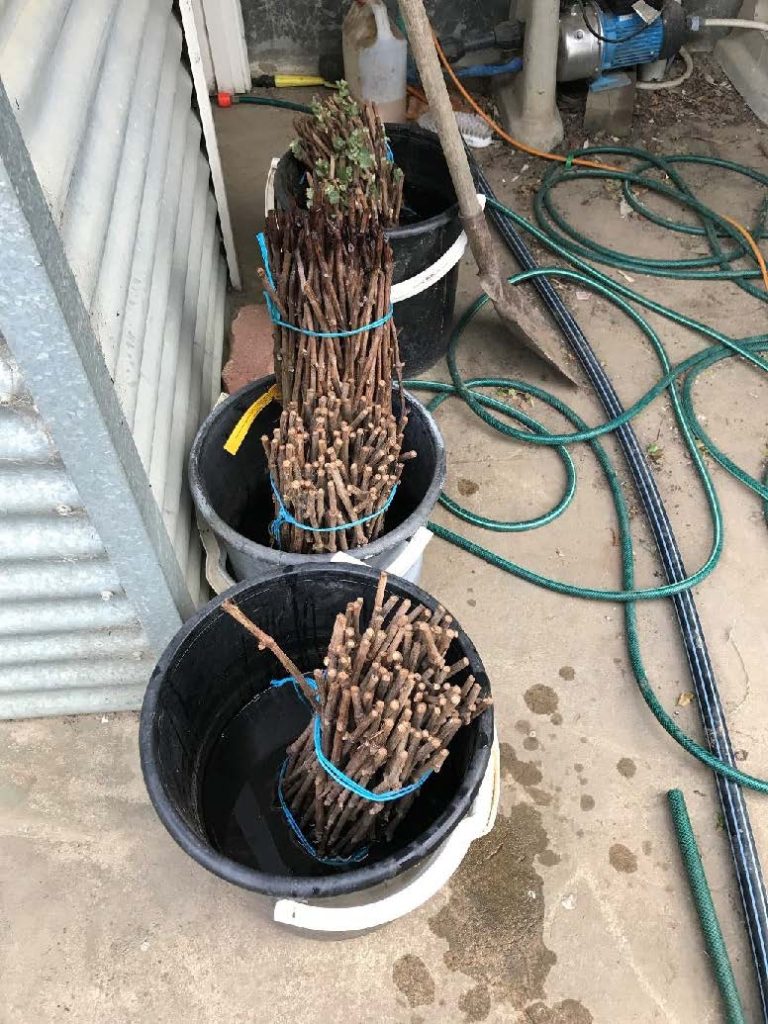
Cuttings need to be rehydrated in clean water for 24 hours prior to grafting once they have been delivered to the vineyard.
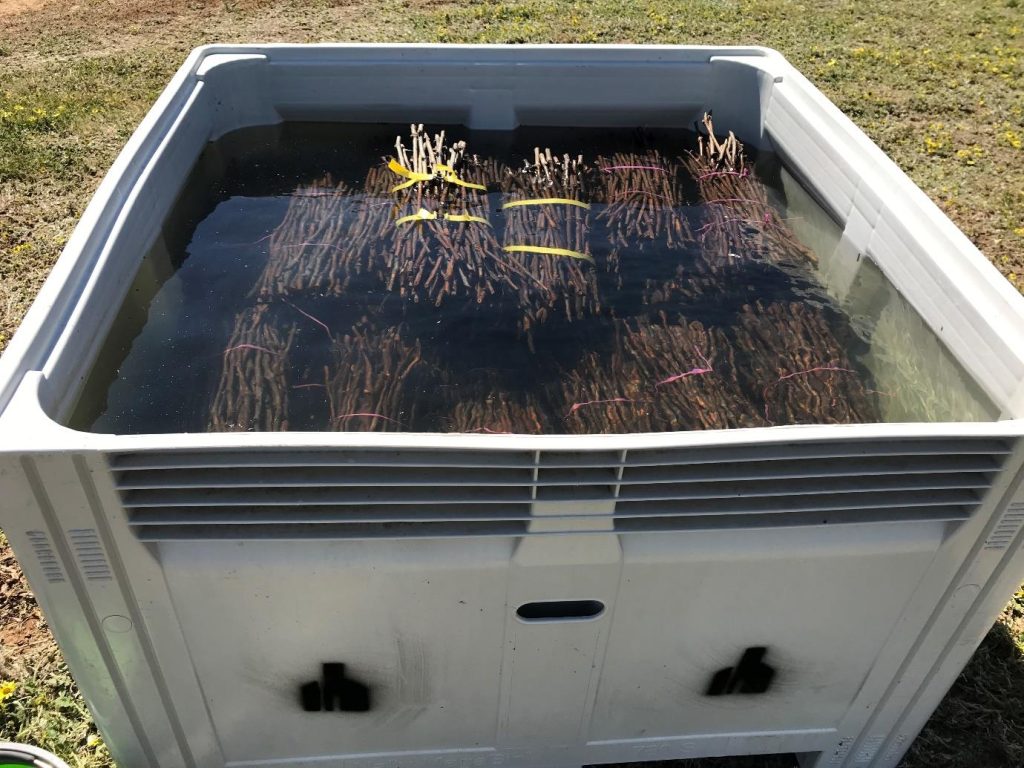
Unwrap from plastic and soak in clean water (dams are OK). The wood is likely to float so weigh it down to fully submerge the entire bundle of cuttings. Half tonne Nally picking bins are ideal. Do not stand them like a flower arrangement in a bucket as they will dry out and not be able to be grafted. Do not add a fungicide to the water.
Keep the budwood fully submerged at all times whilst the grafters are working and only remove them when the grafters have finished and the budwood can be returned to the cold store wrapped in plastic and taped up so that they are airtight.
Place the submerged budwood in a convenient place for the grafters to access each day. Make sure it is preferably shaded or away from direct sunlight and heat.
Furphy: “Leaving budwood in water for more than 24 hours drains carbohydrates and the budwood isn’t viable”
False. Budwood can remain in water for week if required and be fine for grafting so long as it doesn’t break dormancy.
Budwood Handling After Grafting
Once the initial grafting work is completed then leftover budwood can be returned to the coldstore if it hasn’t broken dormancy (wooly buds or shoots appearing). If the budwood had begun to “move” then it is unlikely to be suitable for returning to cold storage and for use as regrafting material in the same season.
When returning budwood to the coldroom ensure the budwood is wrapped into plastic bags and tapped to avoid air contact which dries budwood out and can cause the buds to fail.