
Section 1.6: Grafting methods

Chip bud method
The chip bud method is the most economical method of grafting small or large scale vineyards. It is the fastest form of field grafting which keeps costs at an affordable level for growers.
Bud cutting
This is done by grafters who cut buds prior to grafting. Originally, a grafting knife was used to cut buds; however, there are bud cutting tools available that make the task faster, safer and more consistent. Buds can last for up to a week and sometimes longer. However, to optimise their viability, a grafter will generally only cut enough a day or two in advance.
Budwood from previous seasons should not be used on a large scale as its viability decreases with age and time spent in a coldroom. The risk of using such material is not worth the return.
Two buds per vine versus one bud per vine
When chip budding, the best approach in my experience is to place two buds into the trunk about 15 cm from the top of the trunk. Two buds per vine is the best approach as it offers a greatly increased chance that at least one bud will grow and this will then count as a strike. When one bud fails in a single graft, it is up to the grafters to provide another replacement bud. Depending on when the grafters can return this could result in a delay of many weeks and even months in lost growing time. The regraft will also have to be placed lower on the trunk which sacrifices some of the trunk height. In many instances, the grafters may not be able to return in that season and, as a result, the entire season’s growth potential is lost, delaying crop production and return on investment; trunks are also more prone to dying back to ground level if watershoot growth cannot be promoted to keep them alive.
Double buds are the best investment and insurance for field grafting, particularly in a constantly unpredicatible seasonal climate.
Myth-busting
“I only need a single bud vine so I can save money on double buds.”
False. This is a false economy and the cost of single buds to rectify a poor strike rate can be very expensive. If a single bud fails then there is no backup and trunks may die back before regrafting can occur. There is lost growing time until regrafting can occur, a high cost to regraft and potential failure of the regrafted bud.
Placement of Buds
- On straight trunks, in line with the cordon wire, not facing into the midrow.
- On bent trunks, on the high side of where the bend begins to allow for a new, straighter trunk to be established and for the old one to be removed.
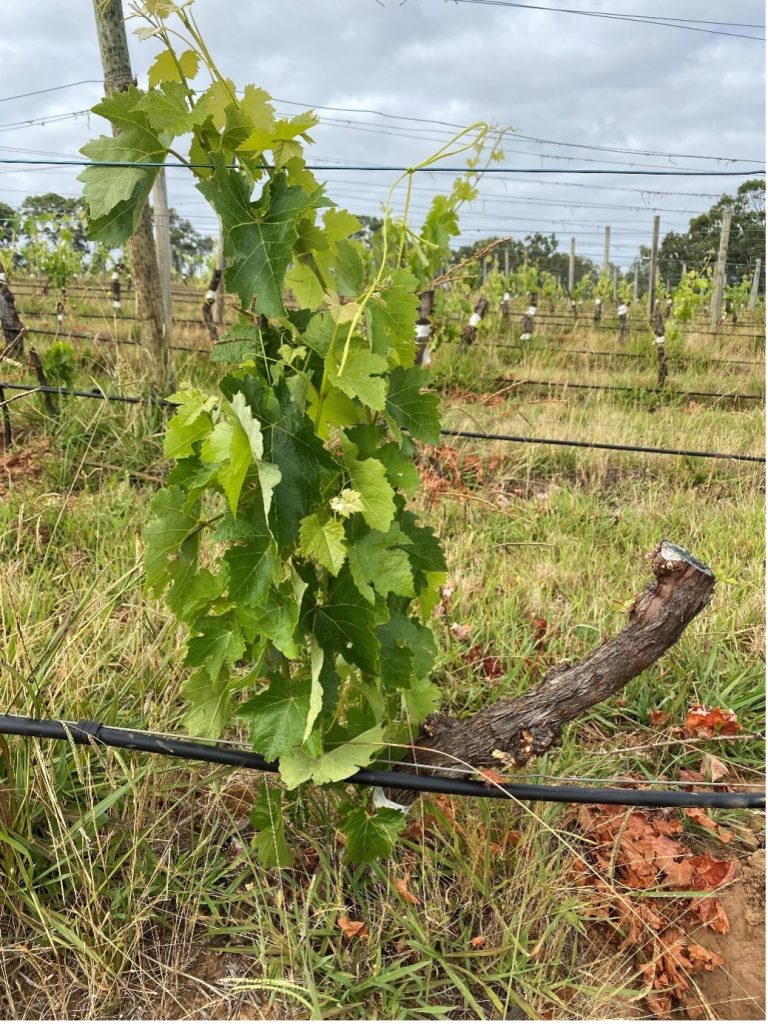
Positioning grafted buds low can correct a bent trunk
Timing of Grafting
The optimal time for field grafting using the chip bud method in the Southern Hemisphere is approximately during the 4-month window from September through to January. This timing is important for optimal vine growth and callusing as well as climate factors such as warm temperatures and high humidity, all of which are critical for successful field grafting. If grafting occurs too early or if the weather is cold and wet vines may not have enough sap flow to callus buds and they can dry out and die before weather conditions are conducive to callusing. Too late in the season can leave new buds exposed to extreme heat and dry soil profiles which can also negatively impact the success of callusing and shoot growth.
Myth-busting
“If my vineyard is grafted as early as possible in the season, my vines will fill the cordon wire faster.”
False. Grafting too early in the season can actually jeopardise the growth and strike rate if buds do not callus fast enough. When grafted in the right weather conditions, most grafts will grow quickly to fill the wire within 8 weeks. Grafted shoots grow longer than established vines so don’t use typical leaf fall as a guide for cessation of growth.
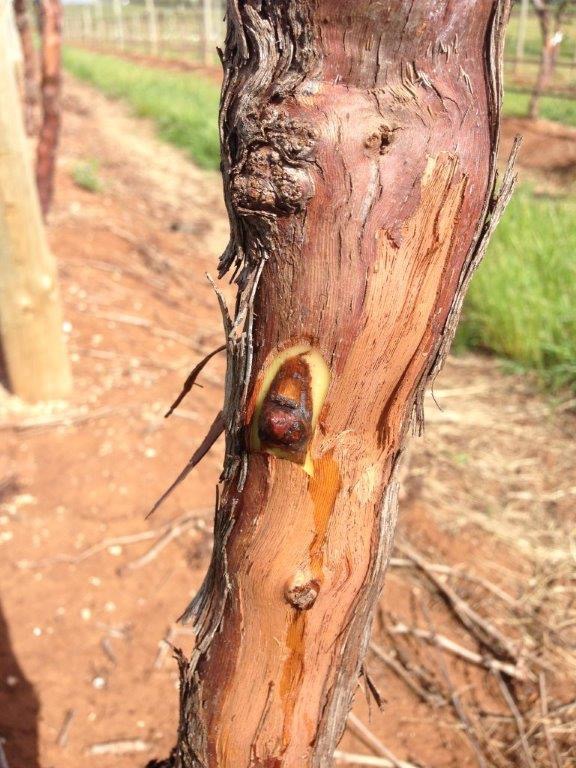
Newly grafted chip bud in trunk prior to taping.