
Section 1.5: Grafting Contractors/Grafters

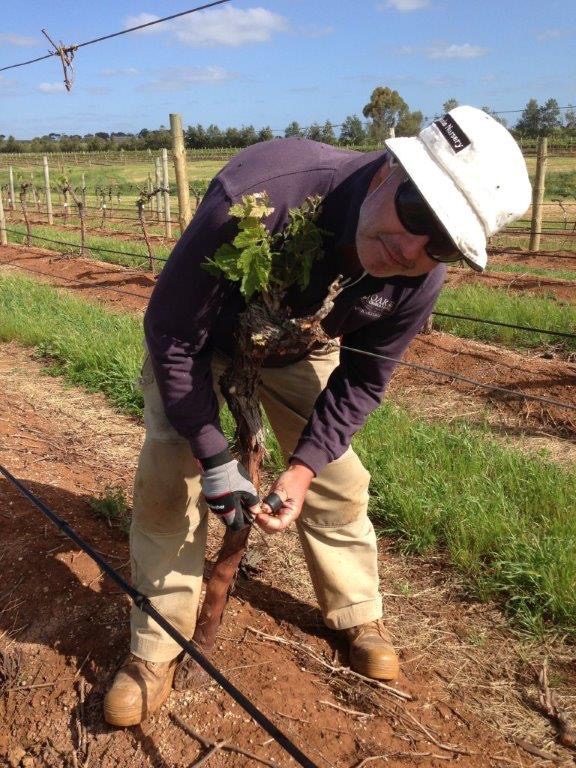
The author – “working hard or hardly working” ?
Grafters are highly skilled and specialised in their field. There are only a handful of professional grafters worldwide and their skills cannot be passed on easilly without time spent practising over many seasons in the vineyard. Field grafters are only considered professionals after five seasons’ experience.
Grafting is a skill that involves placing buds into a trunk or joining the scion to the rootstock. This can be learnt in a short tutorial; however, commercial field grafters have many years of experience, allowing for the many variables in vineyards that can influence the success of a grafting exercise to be taken into account. Most grafters begin as tapers or budcutting support staff for grafters and are able to learn on the job.
Grafting is a physically and mentally demanding job with long hours bent over vines making precision cuts into hard wood and dealing with weather ranging from extreme heat, rain, wind and even snow. The grafting season is short, usually over a four-month period commencing in early spring and finishing in early summer (September to January in the Southern Hemishphere).
Many grafters do not take a day off during this period of time to fit in all their bookings for the season. Commercial grafters will often have support staff comprising a taper and budcutter. Some grafters prefer to cut their own buds; however, this adds 2 to 3 hours to the grafter’s day.
Professional grafters not only require correct technique to perform their job well, they also require an understanding of regional climates, the effect of seasonal conditions on grafts and must guide vineyard owners/managers on how to best prepare vineyards and manage vines after grafting. They need to be physically fit, have excellent communication skills and be highly organised and accountable for their work. Successful grafting relies on much more than placing buds in trunks. This guide provides information to increase the likelihood of a successful grafting job.
Grafters’ Responsibilities
- Punctual — provides an agreed start date (give or take a day or two) and an estimate of the length of time for job completion.
- Informing owner/vineyard manager in advance when to have budwood on site (some budwood needs to travel interstate which can take upwards of a week).
- Adhering to biosecurity measures — clean vehicles, bleached shoes and grafting equipment, no introduced vine material from another property.
- No driving in unauthorised areas of the property, especially midrows.
- Completing a contractor induction form (if required by vineyard manager).
- Respecting the privacy of the land owners.
- Not removing vine material from the property.
- Informing owner/vineyard manager of any issues that may effect grafters or the outcomes of grafting.
- Providing post grafting management advice to avoid issues and maximise success.
- Demonstrating techniques to owner/manager/leading hand/contractor, such as vine tying, watershoot removal and saw cuts for sapflow management.
- Maintaining open communication, either by phone or email, with the client regarding grafting management advice.
Vineyard Owner/Manager Responsibilities
A vineyard that has been prepared for grafting should have the following:
- Completed order form with contact and billing details and a signed sales agreement
- Directions of the vineyard and vineyard location map with block to be grafted identified.
- Budwood delivered on site and rehydrating; let grafters know when budwood has arrived.
- An accurate vine count of the block to be grafted, provided in writing to the grafters, preferrably with vine row counts. If a grafter has to make an estimate this could be expensive to the grower. A grafter may charge the grower if they have to count vines
- Cordons removed from the vineyard.
- Water shoots managed (one to two three-leafed shoots at the highest point on the trunk) and trunks clear of water shoots.
- Midrow slashed.
- Undervine weeds under control.
- No untied or loose wires (risk of eye damage).
- Access to fresh drinking water and shade for grafters.
- Clean toilet with consumables in close proximity to work site.
- Budwood close at hand.
- Clear guidelines as to vineyard access and car parking (biosecurity).
- Grafter privacy — only photograph or video grafters at work if they are agreeable.
- Fully functioning irrigation system.
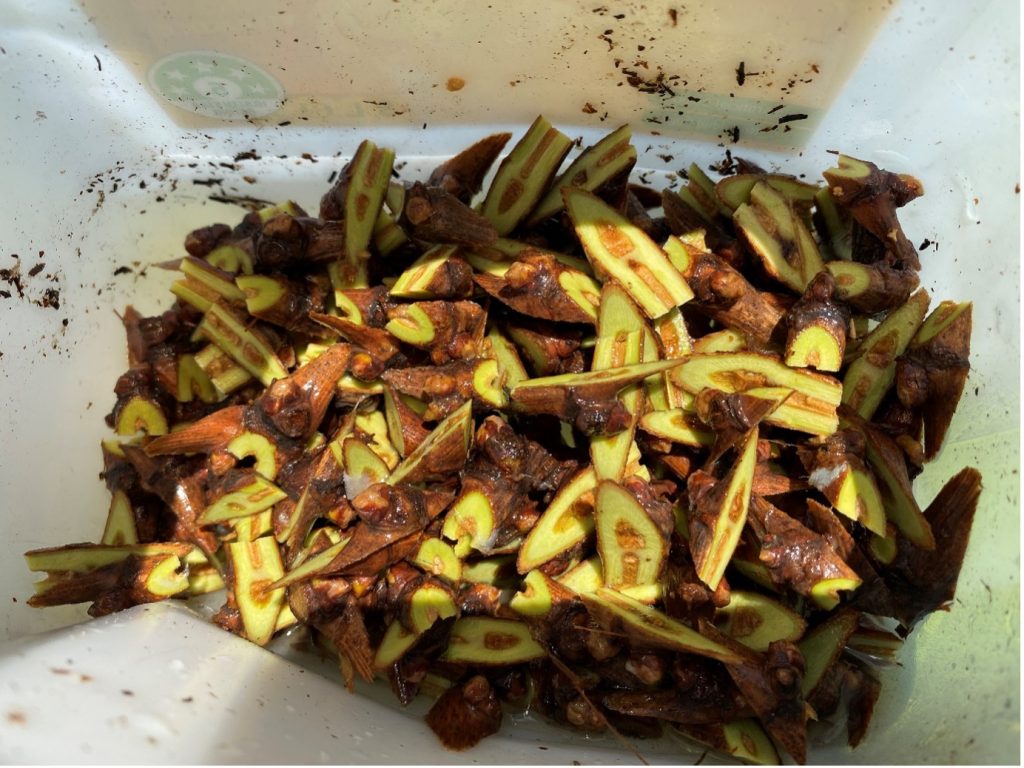
Chip buds ready for grafting (normally these would be covered in water whilst grafting).