Section 2.2: Vineyard Suitability for Grafting – Trunk health & suitability
A cross section cut through a trunk beginning from the highest point and becoming lower until ground level will expose trunk disease symptoms. The level of disease incidence (number of vines/Ha) and severity (degree of infection) will have an impact on the short and long term visibility of grafting.
The older the trunk the greater the likelihood that there will be some level of trunk disease infection. The main trunk disease in Australia is Eutypa lata followed by Botrysphaeria.
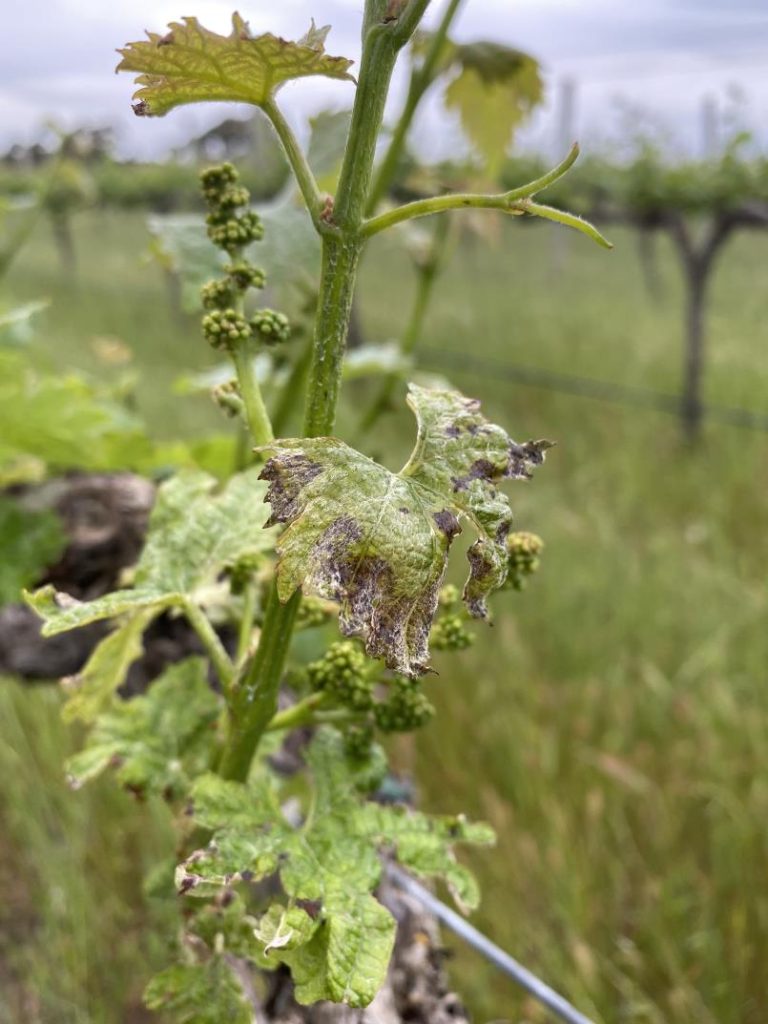
Spring monitoring for Eutypa lata (EL) the season prior to beginning grafitng is strongly recommended. The incidence and severity of EL will be aparent in canopies with stunted and distorted shoots and leaves. Close inspection will reveal black spots on fresh canes and necrotic leaf margins. Infected vines shoud be tagged and their position recorded at this time.
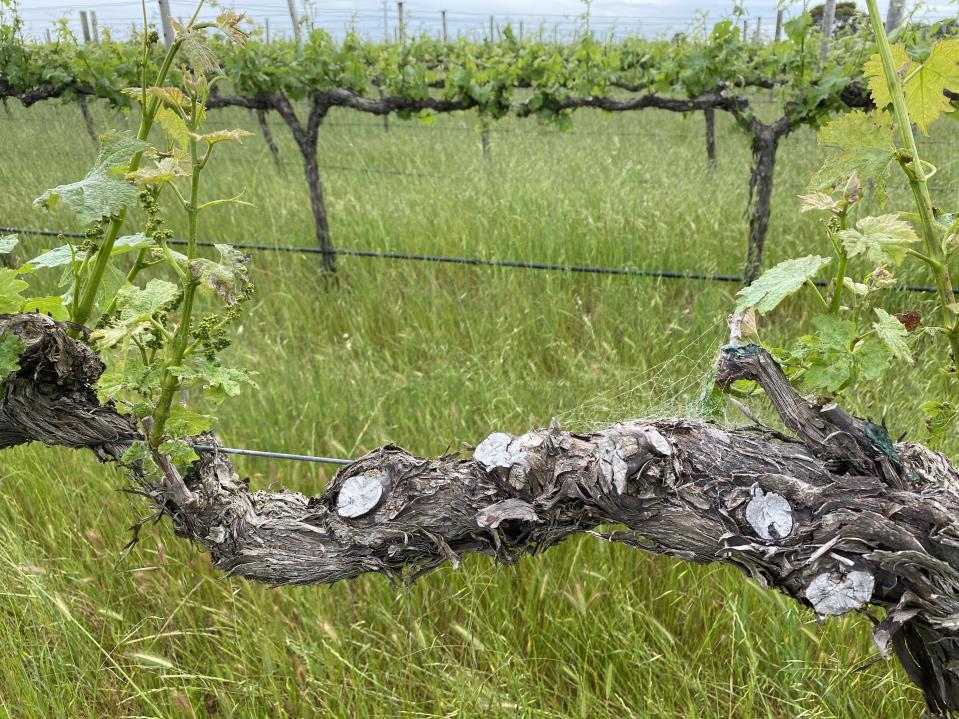
More obvious symptoms which can be observed from Spring through the growing season are the ‘dead arms” or cordons after which the disease EL was named. These vines may not have the shoot and cane symptoms and should also be tagged.
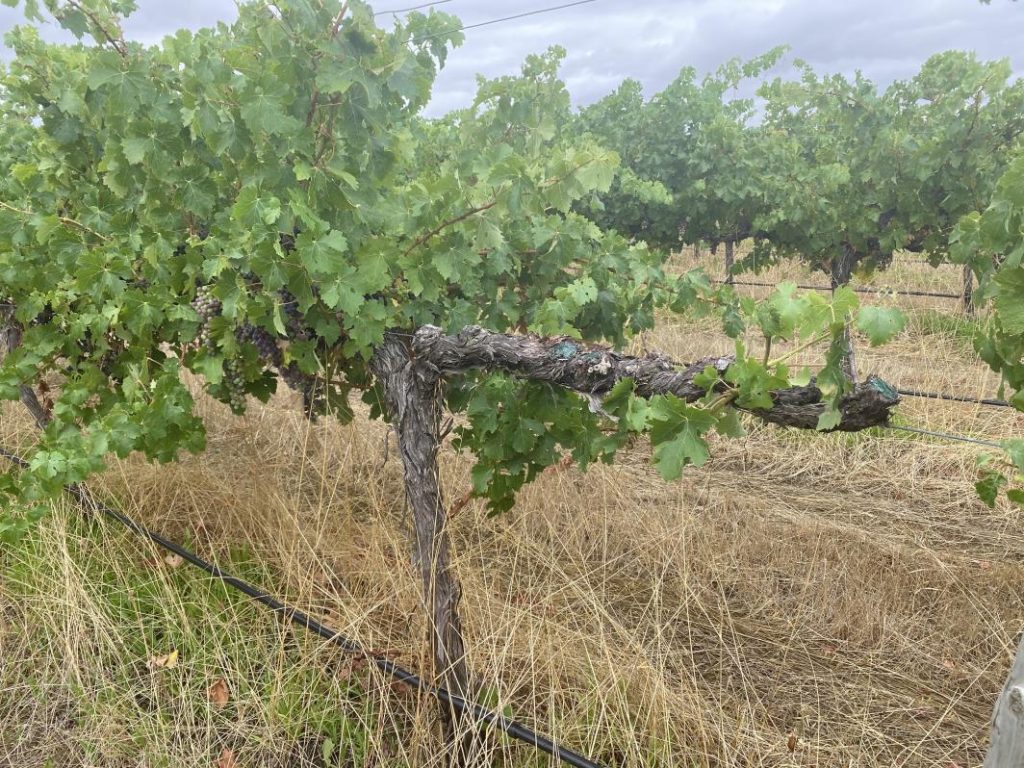
Eutypa lata look alike symptoms
Strangulation
Vines which have been trained to be tightly wrapped on the cordon wire can display similar foliar symptoms to EL with stunted shoots and leaves however, they generally have reddish leaf colour which is not a symptom of EL. It is however a common a symptom of Leafroll 3 virus. Strangled vine cordons are not usually an issue for grafting as the damaged cordon is removed prior to grafting and replaced with the new grafted variety.
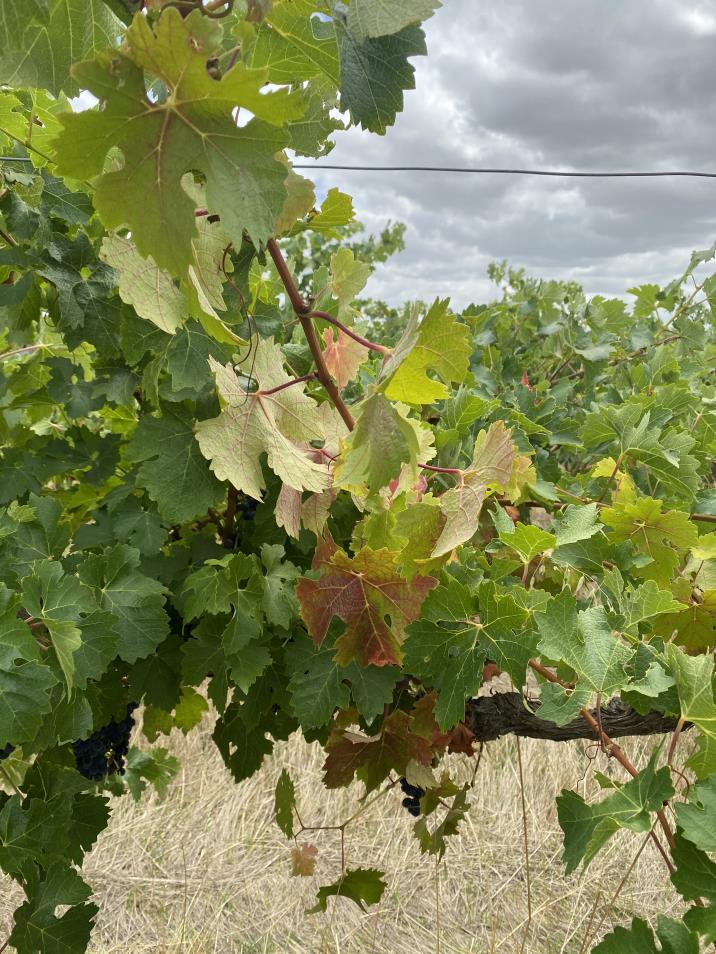
To distinguish between a straggled vine and Eutypa lata a cross sectional cut of the trunk will reveal the symptoms of the trunk disease.
Most vineyards are suitable for field grafting however some are better suited than others.
Some vineyard attributes that make a vineyard a good candidate for successful field grafting are;
- Trunks – virus and crown gall (Agrobacterium tumerfacians) free, straight, preferable zero or at least a low incidence of trunk diseases (Eutypa lata. Botrysphaeria), low number of missing trunks and a diameter wider than pencil thickness.
- Irrigation – Dry grown blocks can be grafted however are at risk of low strike rates in hot, dry seasons. The irrigation system needs to be in good working order.
- Free draining soil – Waterlogged soils can reduce strike rates through “flooding” of buds before callusing occurs.
- Trellis – In good condition (posts and wire) with long term viability.
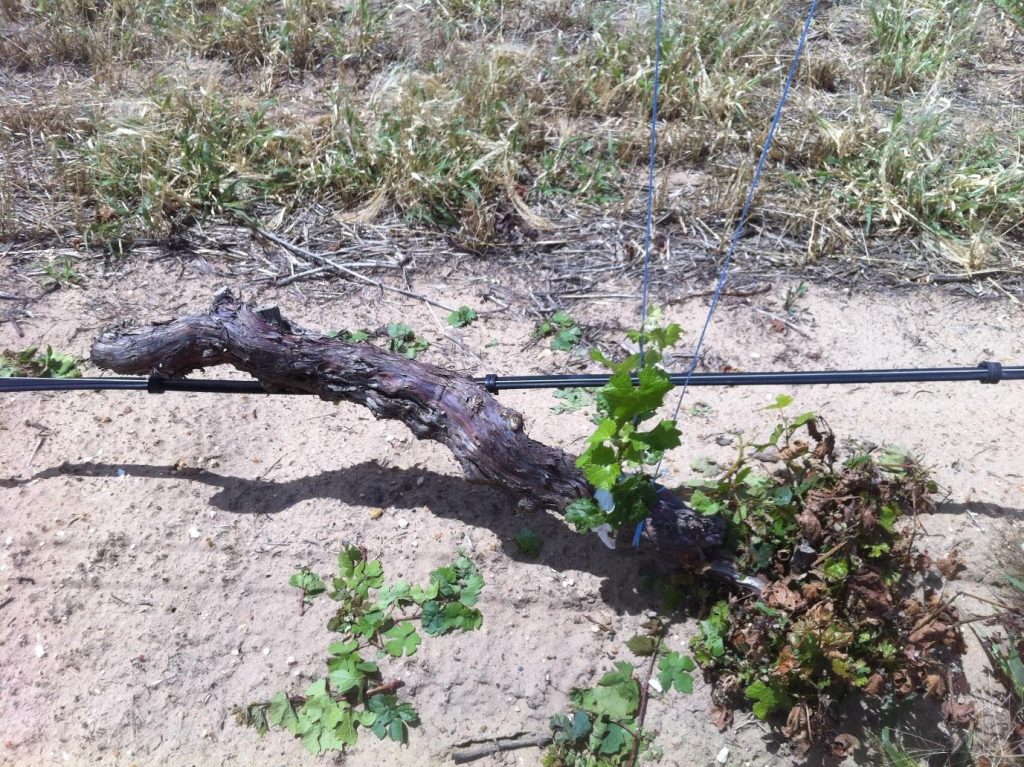
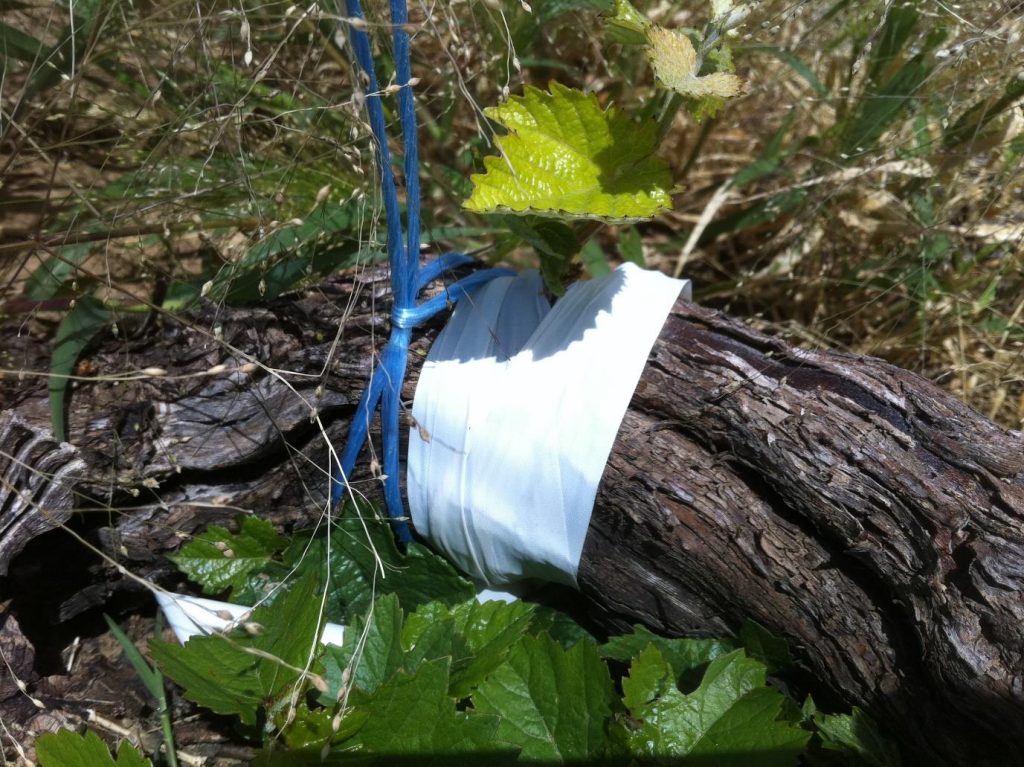
Trunk disease assessment from cross section cuts.
When removing the cordon from the trunk wit a cross section cut, the symptoms of trunk disease can be observed. Necrotic wedges and irregular shapes can be generally associated with EL infection. Black spots can be associated with Botrysphaeria. The incidence and severity of both can have an influence on the success of grafting in the short and long term.
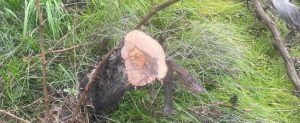
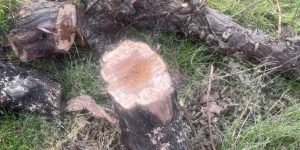
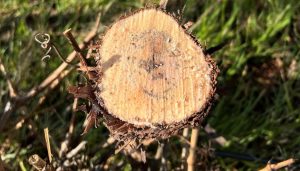
Obviously, the lower the level of infection the greater the prospect of grafting success in the short and long term. For some growers there will be a tradeoff for grafting and disease incidence and severity levels. Expectations and timeframes for growers around vineyard productivity is a highly variable situation. The grower ultimately accepts the risks of grafting compromised trunks outcomes and the grafter can point this out if a poor grafting strike occurs or the vineyard fails in the future due to poor trunk health at grafting.
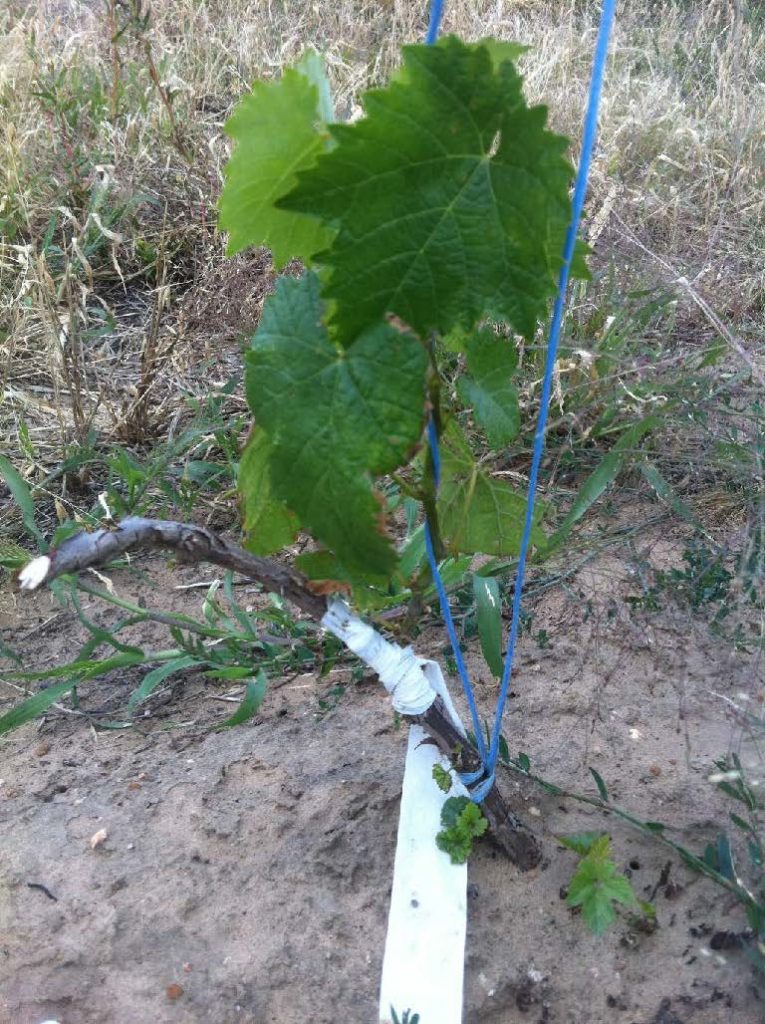
Short trunks
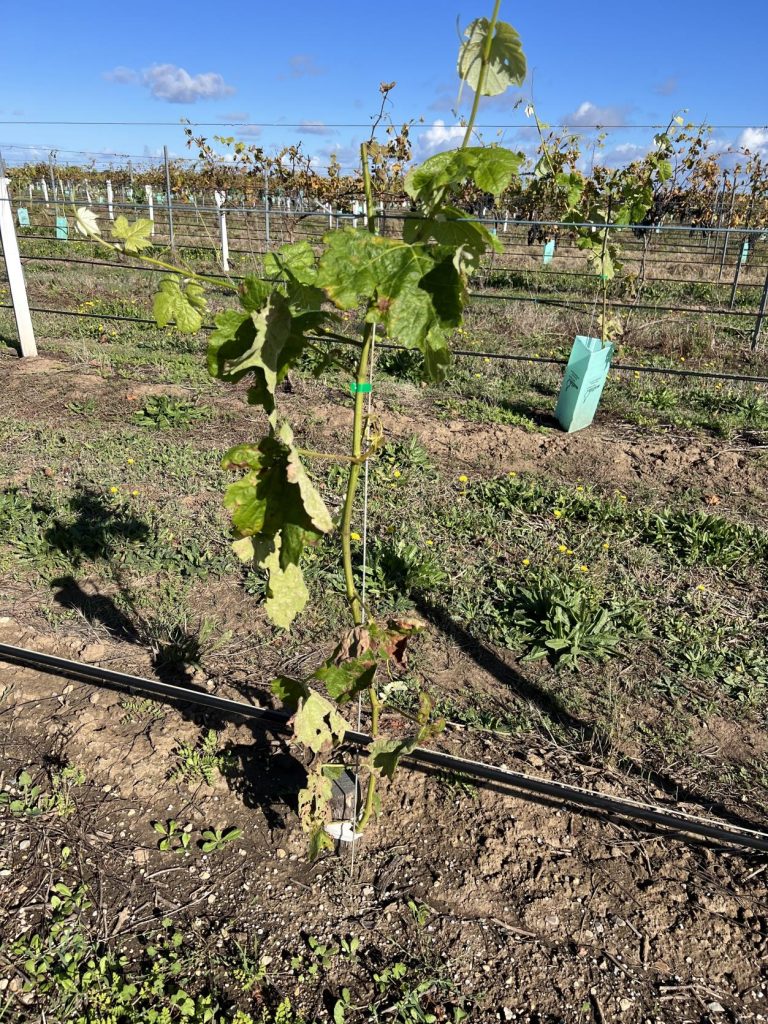
In the process of cutting off cordons for grafting and exposing trunk disease, often the cutting off will continue down towards ground level until healthy trunk is found. This is a well understood practice to cut below the trunk disease infection, pain the wound and rejuvenate the healthy trunk without the trunk disease. Unfortunately this is not an ideal situation for grafting into a short trunk close to ground level.
The main issues with grafting into short trunks are;
- The grafter will most likely charge a higher rate/vine to graft as they cannot move as quickly through the vineyard.
- Short trunks don’t allow for as many options for bud placement and if the stump has some disease present then sometimes only one bud can be grafted. Two is preferred.
- A tall trunk is an asset which is lost with short trunks.
- A new replacement trunk has to be trained at extra expense and a longer timeframe to fill cordons onto the fruiting wire.
- Pests like rabbits and hares can chew grafted shoots and vine guards are recommended which are an added expense to purchase and install.
- Regrafting is nearly impossible and the stump will usually die after the first season and/or send out water-shoots from below ground.
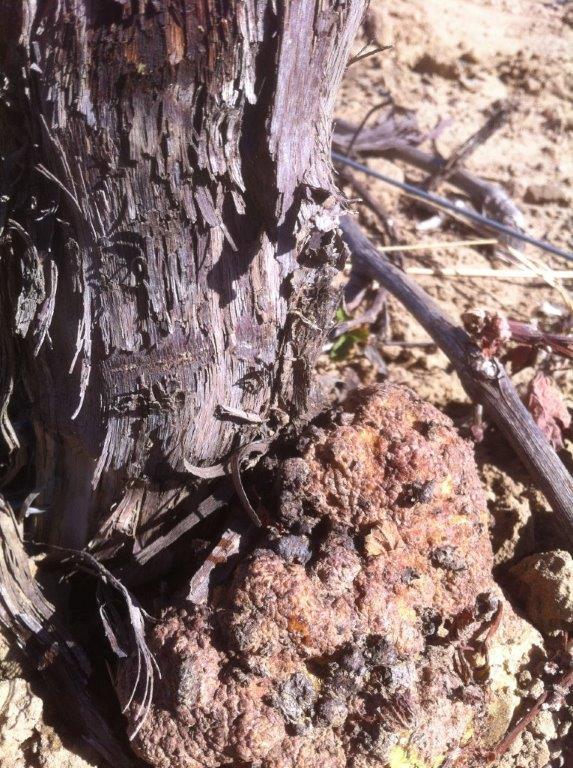
Crown Gall
Agrobacterium tumerfaciens or Crown gall is a bacterial infection in grapevines usually occurring in woody tissue of the trunk and cordons. It usually originated in the vine nursery or mother block and is incurable once a vine is infected. The galls grow on the exterior of the vine usually in response to an injury such as a pruning wound of mechanical damage. Grafting usually stimulates gall growth and if the vines callus then the union between the trunk and new shoot can remain weak into future seasons. There have be instances where the initial strike rate in an infected block of canernet Sauvignon was >98% however, the first harvest after grafting with a mechanical harvester resulted in a number of damaged and severed cordons.